Initial Consultation
Aptos Periodontics & Dental Implants – Aptos, California
Your Initial Consultation
At our practice, your first visit is all about you—your concerns, your goals, and your path to a healthier, more confident smile. We take the time to understand your needs, provide a comprehensive evaluation, and discuss treatment options tailored specifically for you. Whether you’re dealing with gum disease, missing teeth, or cosmetic concerns, your initial consultation is the first step toward achieving lasting oral health and function.
We believe that every patient deserves personalized, high-quality care, and that starts with a thorough, pressure-free consultation. Our team is here to answer your questions, help you understand your options, and ensure you feel comfortable and confident about moving forward with treatment.
What to Expect During Your Visit
Your initial consultation is designed to be informative, relaxed, and comprehensive. Here’s what you can expect during your first visit:

One-on-One Conversation
We start by listening. Your concerns, dental history, and goals are important to us, and we want to fully understand what brought you in and what you hope to achieve.

Comprehensive Oral Exam
A detailed evaluation of your teeth, gums, and jawbone will help us assess your oral health and identify any potential issues.

Advanced Diagnostic Imaging
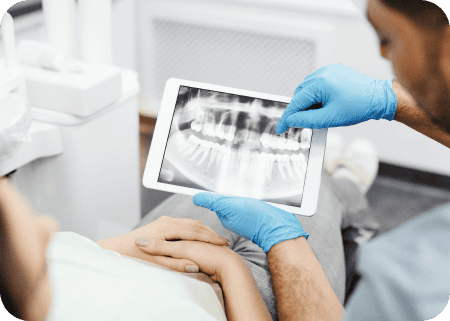
We may take digital X-rays, 3D imaging, or intraoral scans to evaluate the health of your jawbone, the position of your teeth, and the overall condition of your oral structures.

Personalized Treatment Planning
Once we’ve completed the evaluation, we’ll walk you through our findings and discuss customized treatment recommendations tailored to your needs.

Insurance & Financing Discussion
To help you plan for your treatment, our team will review your insurance benefits (if applicable) and discuss flexible payment options that fit your budget.

Post-Treatment Care and Follow-Up
After any procedure, you’ll receive aftercare instructions. The doctor may also schedule a follow-up appointment to check on your progress.
How to Prepare for Your Consultation
To ensure a smooth and productive visit, we recommend bringing the following:
- A list of any concerns or questions about your oral health or potential treatments.
- Your dental and medical history, including any medications you’re currently taking.
- Your dental insurance information, so we can assist in verifying coverage and benefits.
We encourage open communication—if there’s anything you’d like to discuss regarding your dental health, treatment anxieties, or expectations, let us know. Our team is here to help!
Meet Dr. Richert
Board-Certified Periodontist
Dr. Richert prioritizes his clinical approach to meet the comprehensive needs of his patients while providing transparent and optimal treatment care plan options. His decade of experience complements the diversity of clientele within the communities of Santa Cruz County.
As a native of Mesa, Arizona, Dr. Richert received his bachelor’s degree in Biology from Arizona State University. He continued his graduate education at the Arizona School of Dentistry & Oral Health, earning a Doctor of Dental Medicine and a Master of Public Health degree. Following his graduate training, Dr. Richert completed his residency in periodontics and implantology at the Texas A&M College of Dentistry. In addition to his residency certificate in periodontics, Dr. Richert earned a Master of Science in Oral Biology. Dr. Richert is also a board-certified periodontist and as such is a Diplomate of the American Board of Periodontology.
Meet Dr. Richert
Board-Certified Periodontist

Before & After Images
Gum Grafting for Molars and Premolars
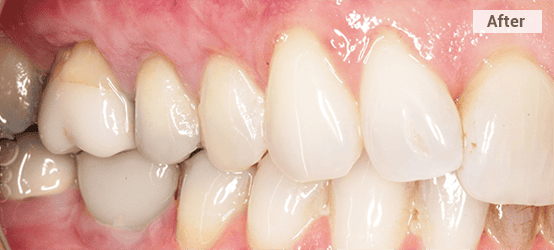
When gum recession affects the back teeth, it can quickly jeopardize oral health. Molars and premolars do most of the chewing, so exposed roots in these areas are more prone to cavities, temperature sensitivity, and wear. In a molar or premolar graft, your periodontist gently harvests a small patch of tissue, usually from the palate, and places it around the recessed gum line of the affected teeth.
The graft repositions the gums, shielding vulnerable roots from decay, stabilizing the bite under heavy chewing forces, and reducing sensitivity to hot and cold foods. Restoring healthy gum coverage in these high-stress areas also helps prevent further recession and supports the long-term strength of the surrounding bone.
Dental Implants
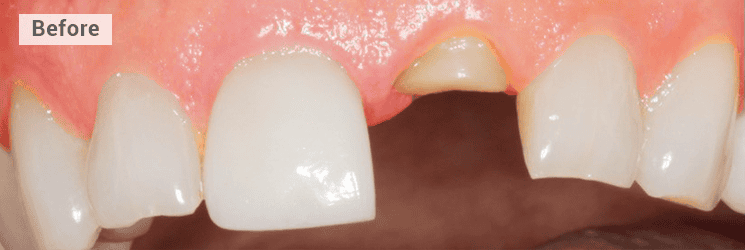
Dental implants are a popular and effective solution for replacing missing teeth, offering a long-term, natural-looking alternative to traditional dentures or bridges. The procedure involves surgically placing a titanium post into the jawbone, which acts as a replacement for the tooth root. Over time, the post fuses with the bone through a process called osseointegration, creating a stable foundation for a custom-made crown that looks and functions like a natural tooth. Dental implants provide a durable and comfortable solution, improving both the aesthetics and functionality of the smile.


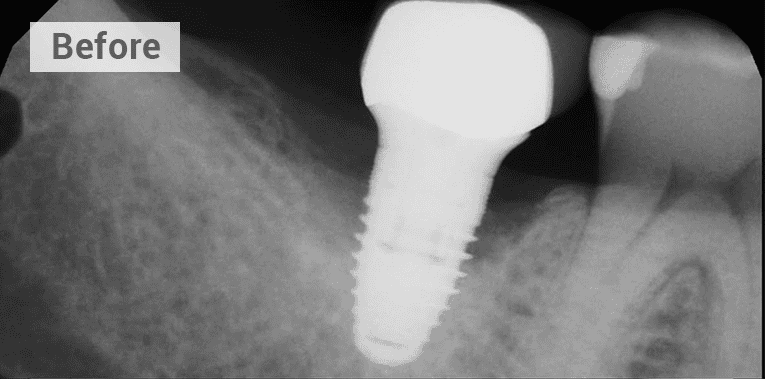
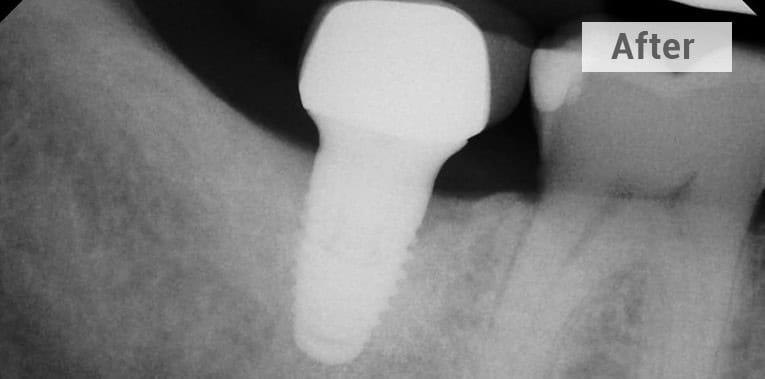
Dental Implant Failure
Dental implant failure is uncommon but can occur due to inadequate bone integration (osseointegration), infection at the implant site (peri-implantitis), or excessive pressure from teeth grinding or poorly fitted restorations. Treatment involves addressing the underlying cause. This may include antibiotics and improved oral hygiene for infections, adjustments to restorations to reduce stress, or bone grafting to enhance jawbone support. Regular dental check-ups and good oral hygiene are essential to minimize the risk of implant complications.

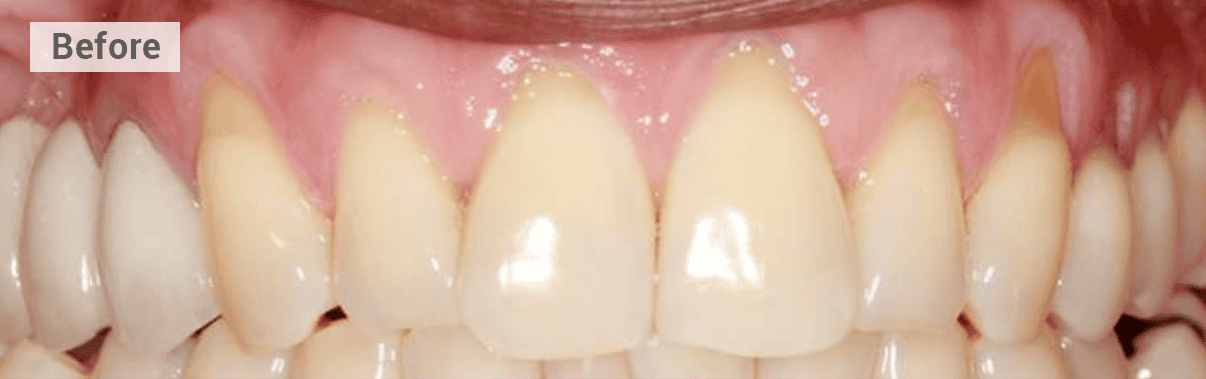
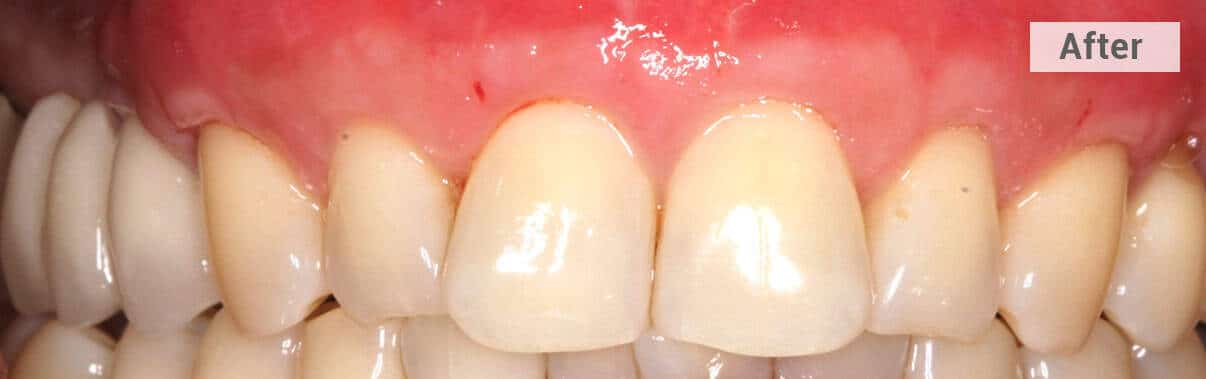
Gum Grafting
Gum grafting is a dental procedure used to treat gum recession, a condition that arises when gum tissues recede from the teeth, exposing the roots and increasing the risk of decay, sensitivity, and tooth loss. During the procedure, a periodontist takes tissue from another part of the mouth, often the palate, and grafts it onto the affected areas of the gums.
This helps restore the gumline, protect tooth roots, and improve the appearance of the smile. Gum grafting not only enhances aesthetics but also helps to prevent further gum recession and improve overall oral health by promoting the proper attachment of the gums to the teeth. The recovery time is typically short, and with good oral care, the results are long-lasting.
Multi-Unit Implants
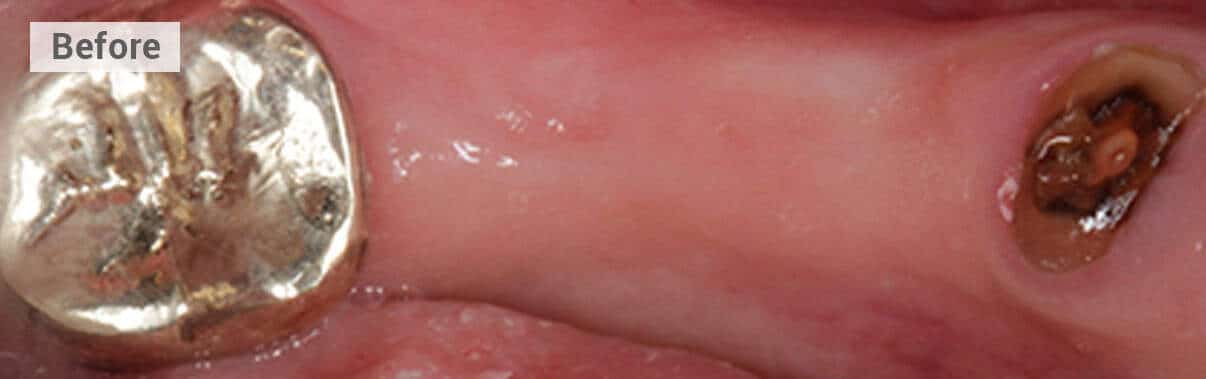
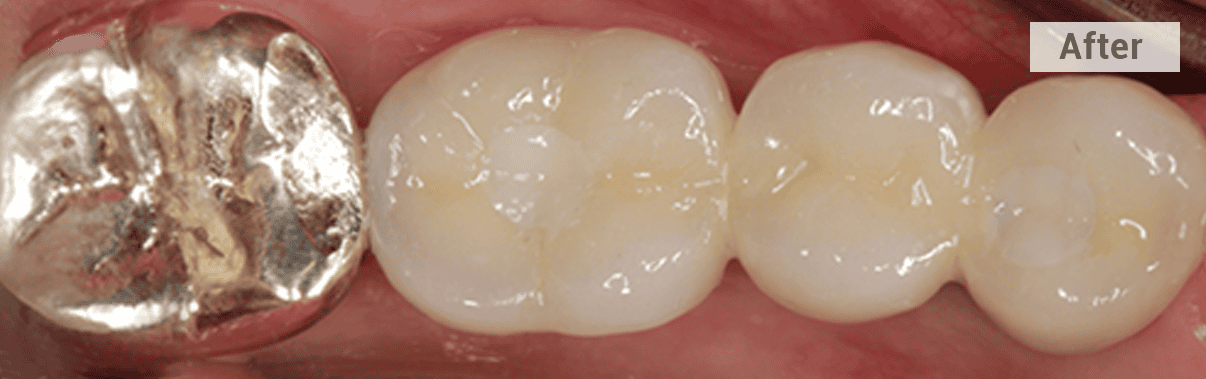
A multi-unit implants are a dental solution used when multiple teeth need to be replaced, typically in patients with extensive tooth loss or damage. Instead of placing individual implants for each missing tooth, the procedure involves placing a series of implants that support a bridge or several crowns, all attached to a common framework. This approach is ideal for patients who need to restore several teeth at once, such as in the case of a full arch restoration. The benefits of multi-unit implants include improved stability, reduced treatment time, and a more cost-effective solution compared to placing individual implants for each missing tooth.


Take the First Step Toward a Healthier Smile
Your journey to improved oral health and confidence starts with a single visit. If you’ve been putting off dental treatment, now is the perfect time to get the answers and guidance you need.
Schedule your initial consultation today, and let’s take the first step toward restoring and enhancing your smile. We look forward to welcoming you and providing the exceptional care you deserve!