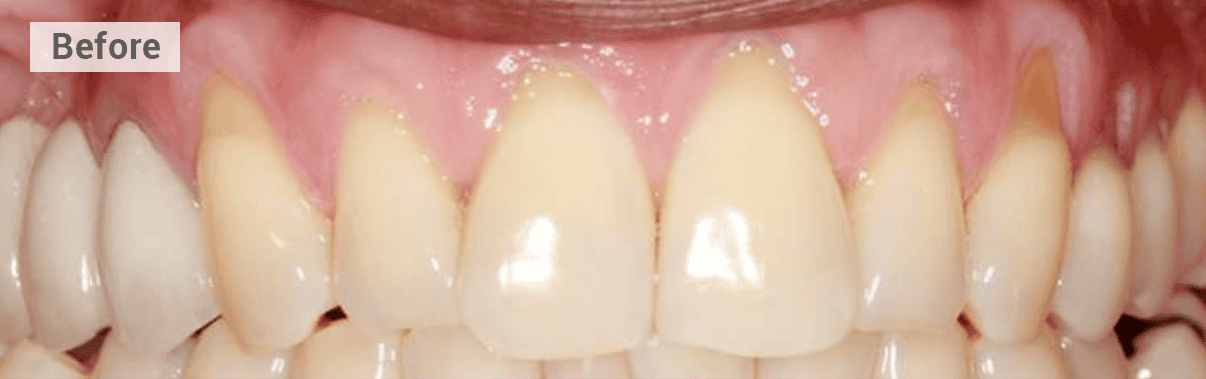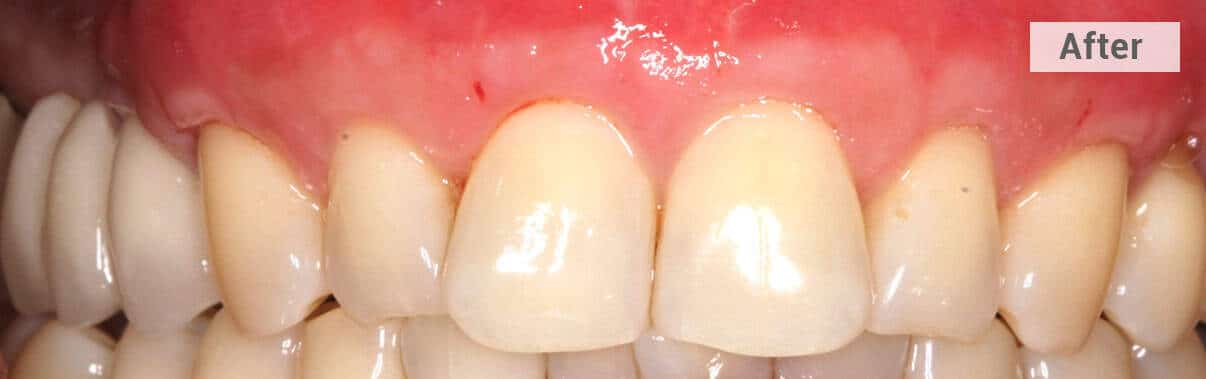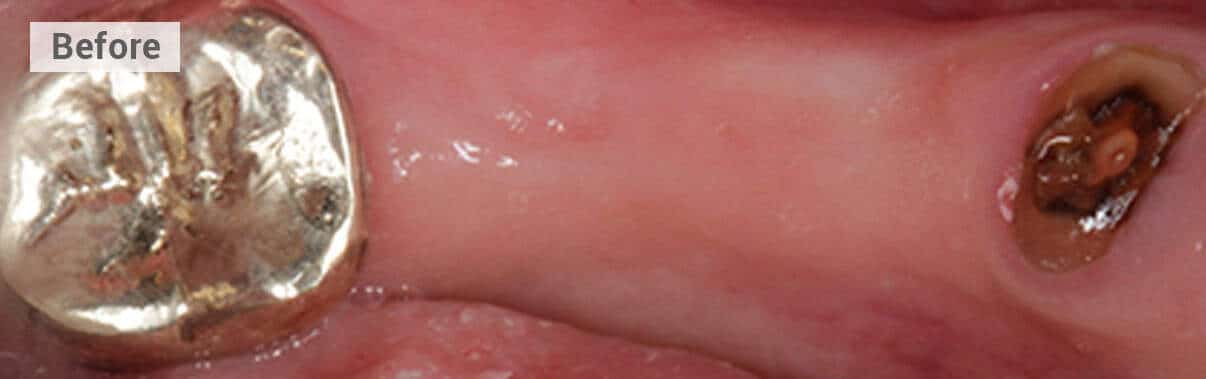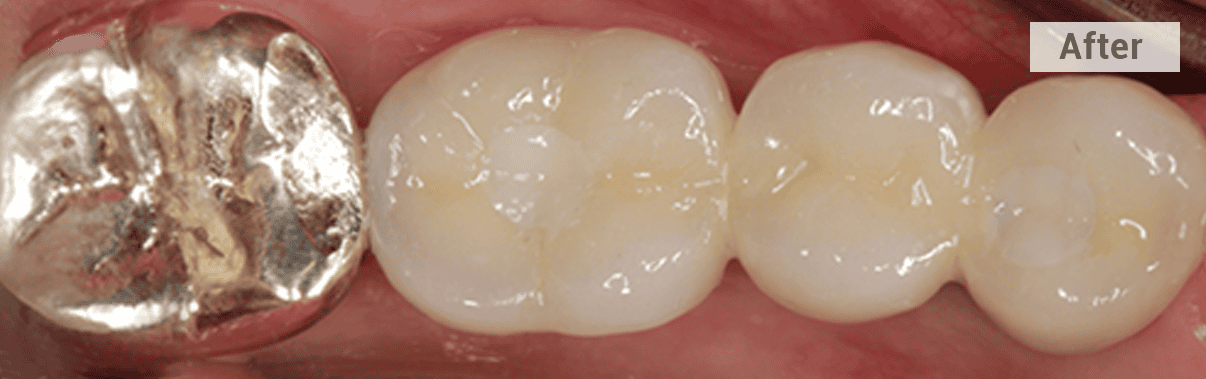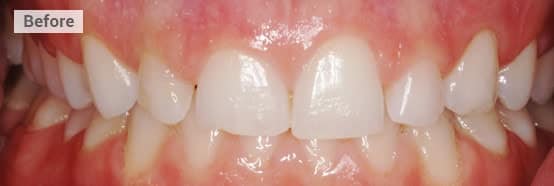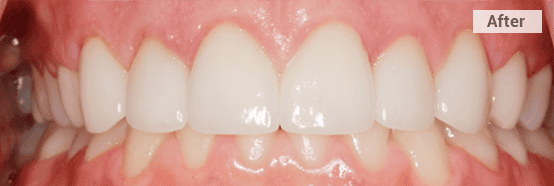
Before & After Images
Gum Grafting for Molars and Premolars
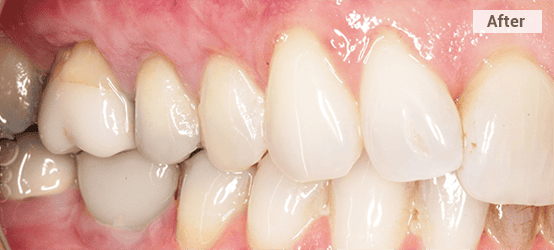
When gum recession affects the back teeth, it can quickly jeopardize oral health. Molars and premolars do most of the chewing, so exposed roots in these areas are more prone to cavities, temperature sensitivity, and wear. In a molar or premolar graft, your periodontist gently harvests a small patch of tissue, usually from the palate, and places it around the exposed roots to restore coverage, protect the tooth, and promote healthy gum attachment.
The graft repositions the gums, shielding vulnerable roots from decay, stabilizing the bite under heavy chewing forces, and reducing sensitivity to hot and cold foods. Restoring healthy gum coverage in these high-stress areas also helps prevent further recession and supports the long-term strength of the surrounding bone.
Dental Implants
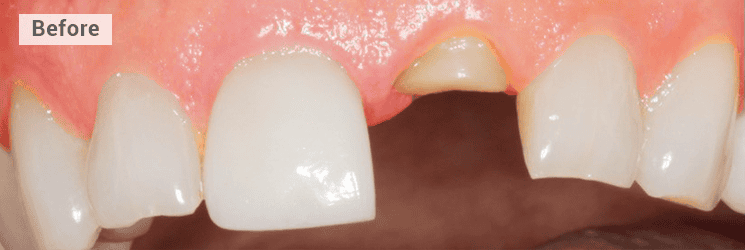
Dental implants are a popular and effective solution for replacing missing teeth, offering a long-term, natural-looking alternative to traditional dentures or bridges. The procedure involves surgically placing a titanium post into the jawbone, which acts as a replacement for the tooth root. Over time, the post fuses with the bone through a process called osseointegration, creating a stable foundation for a custom-made crown that looks and functions like a natural tooth. Dental implants provide a durable and comfortable solution, improving both the aesthetics and functionality of the smile.


Dental Implant Failure
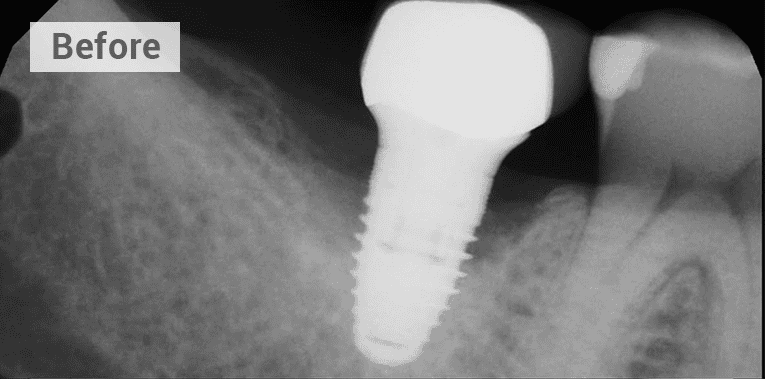
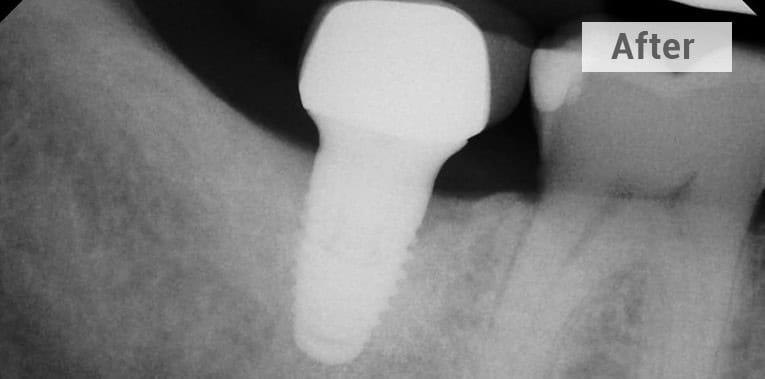
Dental implant failure is uncommon but can occur due to inadequate bone integration (osseointegration), infection at the implant site (peri-implantitis), or excessive pressure from teeth grinding or poorly fitted restorations. Treatment involves addressing the underlying cause. This may include antibiotics and improved oral hygiene for infections, adjustments to restorations to reduce stress, or bone grafting to enhance jawbone support. Regular dental check-ups and good oral hygiene are essential to minimize the risk of implant complications.

Gum Grafting
Gum grafting is a dental procedure used to treat gum recession, a condition that arises when gum tissues recede from the teeth, exposing the roots and increasing the risk of decay, sensitivity, and tooth loss. During the procedure, a periodontist takes tissue from another part of the mouth, often the palate, and grafts it onto the affected areas of the gums.
This helps restore the gumline, protect tooth roots, and improve the appearance of the smile. Gum grafting not only enhances aesthetics but also helps to prevent further gum recession and improve overall oral health by promoting the proper attachment of the gums to the teeth. The recovery time is typically short, and with good oral care, the results are long-lasting.
Multi-Unit Implants
A multi-unit implants are a dental solution used when multiple teeth need to be replaced, typically in patients with extensive tooth loss or damage. Instead of placing individual implants for each missing tooth, the procedure involves placing a series of implants that support a bridge or several crowns, all attached to a common framework. This approach is ideal for patients who need to restore several teeth at once, such as in the case of a full arch restoration. The benefits of multi-unit implants include improved stability, reduced treatment time, and a more cost-effective solution compared to placing individual implants for each missing tooth.
Cosmetic Periodontics
Cosmetic periodontics refines and balances the gums to create a more attractive smile. Concerns such as a gummy smile, uneven gumlines, or teeth that appear too short can often be corrected in a single visit with gum-contouring techniques that deliver immediate results. Leveraging advanced methods such as laser recontouring and crown lengthening, periodontists can sculpt precise gingival contours, reveal more natural tooth structure, and bring harmonious symmetry to the entire smile.